
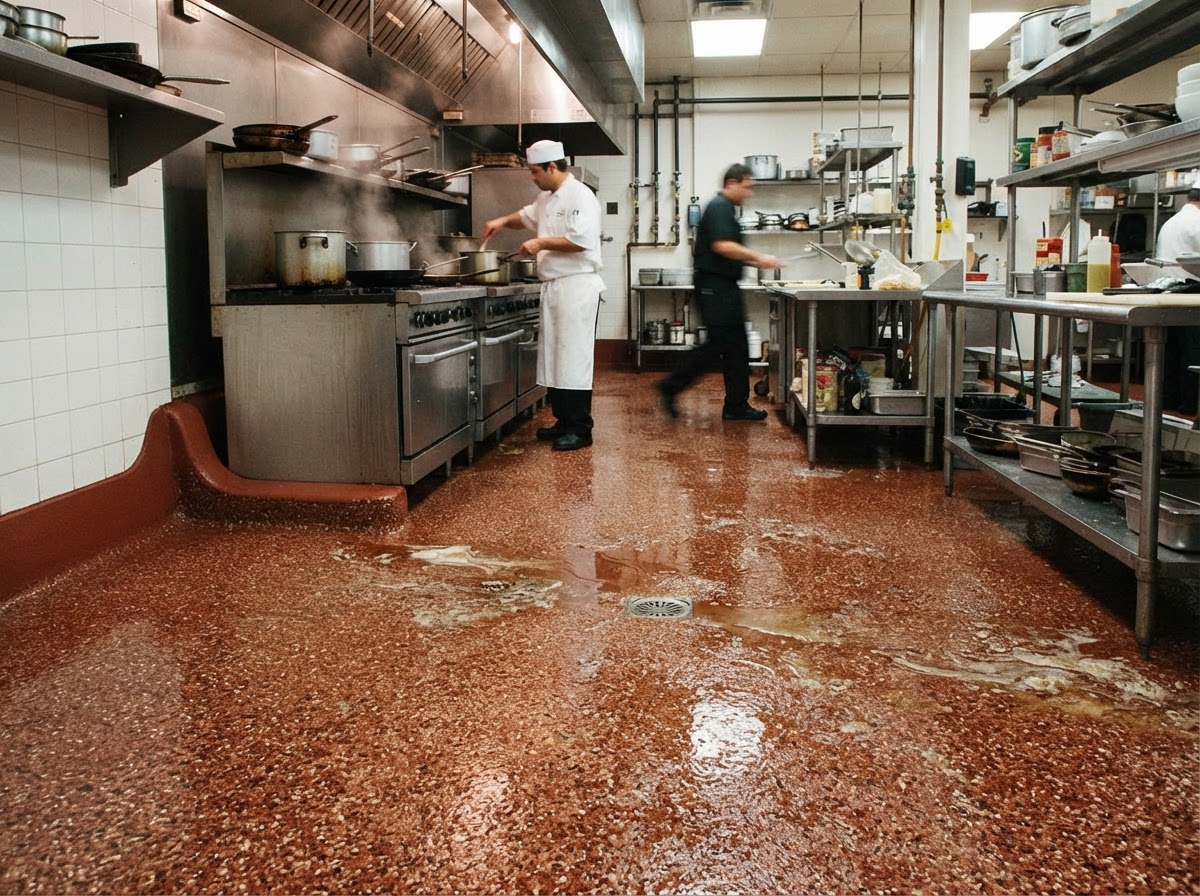
Quartz and decorative flake both broadcast aggregate into a resin to add texture and color, but they suit different spaces. Quartz gives a fine, granular, high-traction surface; flake gives a larger-chip, multi-color look with moderate texture. The choice comes down to how much traction you need, the look you want, and how the space is used.
Texture and Traction
Quartz gives the more aggressive, consistent traction — a densely packed granular surface built for wet and barefoot areas. Flake gives a subtler texture from the vinyl chips, enough to improve grip over a smooth coating but less than quartz. If slip resistance is the priority — pool decks, locker rooms, commercial kitchens — quartz leads. If moderate texture is enough — garages, basements, patios — flake is the common pick.
Appearance
Flake gives a multi-color, speckled surface with a wide range of color blends; the chips hide wear and give a decorative look. Quartz gives a more uniform, fine-grain surface in a tighter color range; it reads as a textured solid more than a decorative blend. Flake is the more decorative of the two; quartz is the more functional. See both on the color chart.
Comfort Underfoot
Flake is smoother and more comfortable underfoot and for rolling traffic — creepers, carts, furniture. Quartz is more textured, which is great for traction but less comfortable for barefoot or floor work, and slightly more resistant to rolling. For a residential space where comfort matters, flake usually wins; for a wet commercial space where safety matters, quartz usually wins.
Choosing by Space
Garages, basements, home gyms, and covered patios lean flake for the look and moderate grip. Pool decks, commercial kitchens, locker rooms, and wet industrial areas lean quartz for the traction and chemical resistance. Some spaces — a patio that's sometimes wet — fall in between, and we help you weigh it. For background on how these compare to other systems, see our flake vs. metallic guide.