
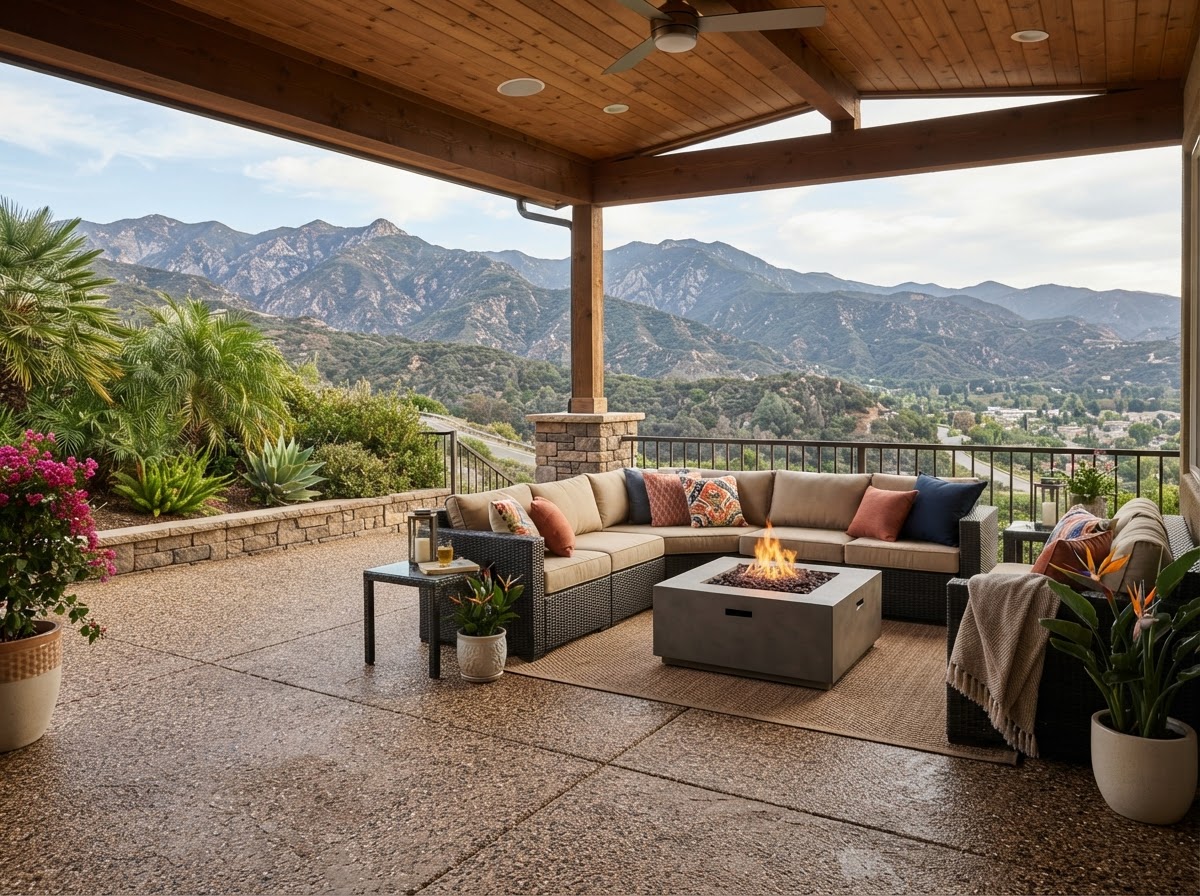
Patio texture is a trade-off. More texture means better traction when wet; less texture means a smoother surface that's easier on bare feet and furniture. The right amount depends on how you use the patio — a covered seating area and a wet pool surround want different finishes. Here's how the options compare.
Smooth Seal — Least Texture
A penetrating or film-forming sealer adds protection with minimal texture. It's comfortable underfoot and easy to clean, but it offers the least wet traction. A smooth seal suits a covered patio or a seating area that stays dry, where slip risk is low and you want the concrete's look preserved with a sheen.
Decorative Flake — Medium Texture
A flake broadcast adds a subtle, even texture from the vinyl chips, improving traction over a smooth coating without being rough. It also hides wear and gives you color options. A UV-stable flake system works for an uncovered patio that sees some water but isn't a constantly wet pool surround. See the flake options on the color chart.
Quartz — Most Texture
A quartz finish gives the most reliable wet traction of the three, with a granular surface built for barefoot and wet use. It's the choice for pool decks and patios that get hosed down or stay damp. The trade-off is a more textured feel underfoot, which is why grain size matters — see our quartz pool deck guide for that detail.
Matching Texture to Use
Ask how the patio is actually used: covered or open, dry or wet, shoes or bare feet, furniture that slides or stays put. A covered dining patio leans smooth; an open poolside patio leans quartz; a general-purpose uncovered patio often lands on flake. We help you match the finish to the space and confirm it with a physical sample.