
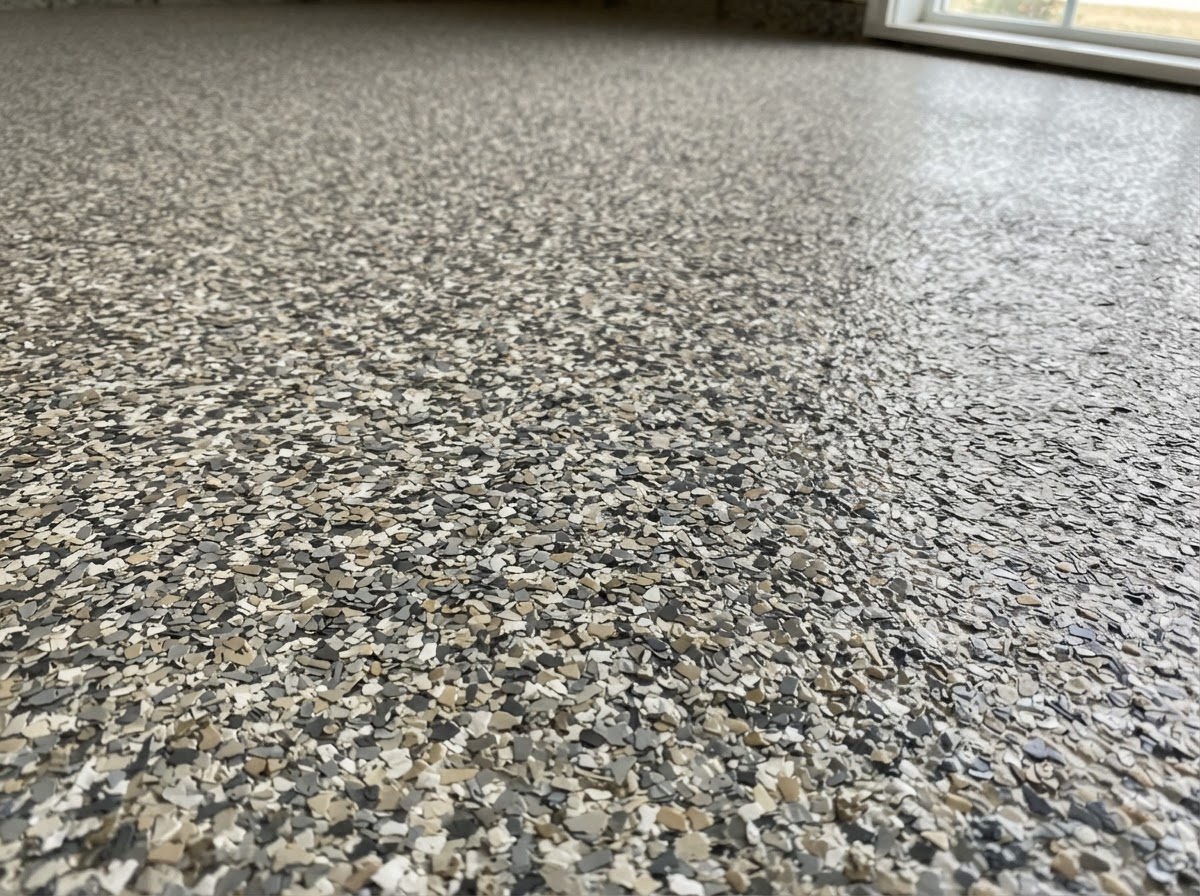
A two-car garage is roughly 400 to 600 square feet of uninterrupted floor, and a flake blend that looks balanced on a small chip can look busy — or flat — across that much space. The choices that matter at scale are chip size, the balance of light and dark chips, and how much contrast the blend has against your walls and cabinets.
Chip Size at Scale
Larger flakes create a bolder, more varied look that can read busy across a big floor; smaller flakes create a more uniform, quieter surface. For a two-car garage, a mid-size flake is the common choice — enough variation to hide dust and tire marks without looking speckled wall to wall. The size also affects how the floor photographs and how much texture you feel.
Light and Dark Balance
A blend's overall value (how light or dark it reads) matters more than any single chip color. A blend dominated by light chips brightens a dim garage but shows dirt; one dominated by dark chips hides dirt but shows dust. A balanced mid-tone blend with a mix of light and dark chips is the most forgiving — it breaks up the surface so neither dust nor scuffs dominate.
Contrast With Walls and Cabinets
Look at the blend next to your wall paint and any cabinetry. A floor that nearly matches the walls can look flat; too much contrast can make the floor shout. A flake blend that picks up a secondary color from your cabinets or trim ties the space together. Hold a physical sample in the garage under your lighting to see the real combination.
Hiding vs. Showing Wear
The whole point of a flake broadcast is that the multi-color surface hides the daily wear a garage creates — tire marks, scuffs, dropped tools. A single-color solid floor shows every mark; a well-chosen flake blend makes them disappear. Browse the flake color chart, shortlist two or three blends, and request physical samples of those before deciding.