
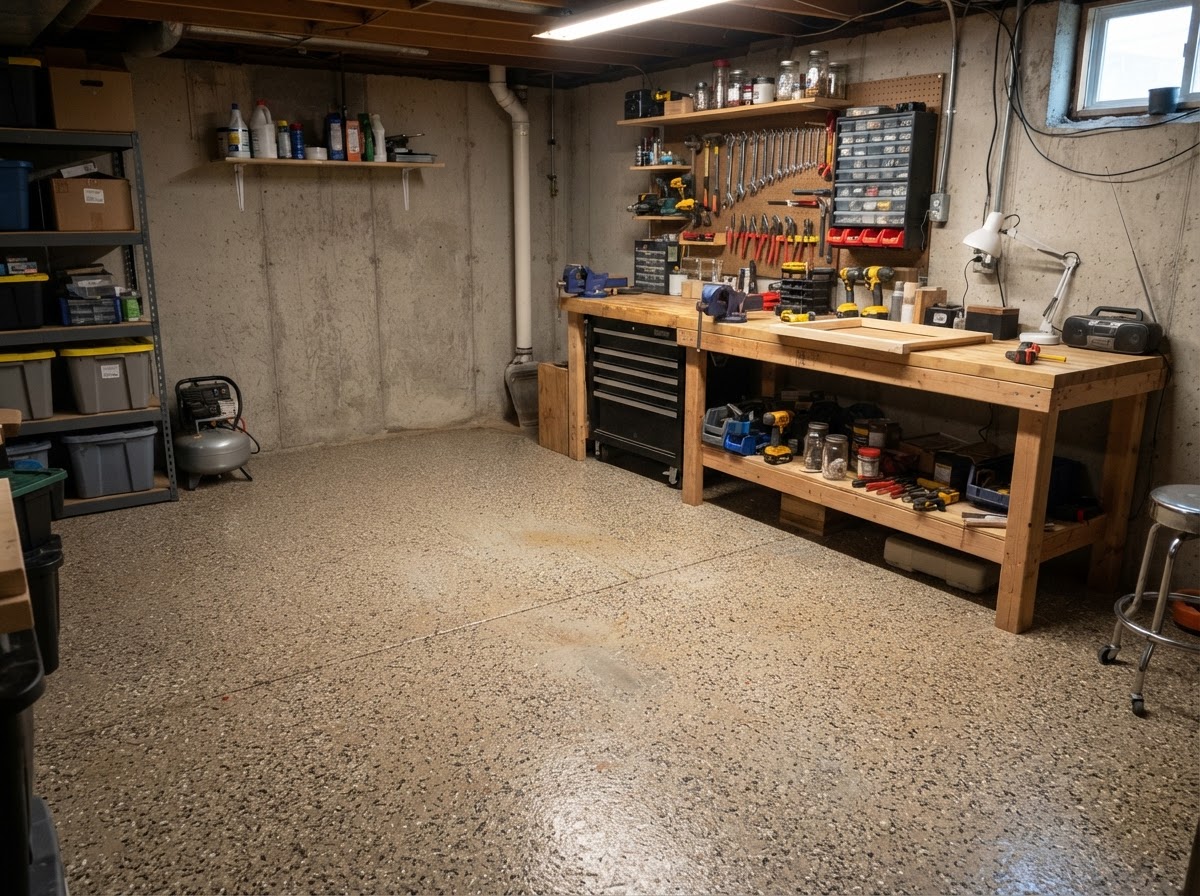
An older basement floor has a history — moisture, old paint or adhesive, settling cracks, maybe a previous failed coating. Any of those can defeat a new coating if they're not addressed first. The assessment before coating is what determines whether the floor will bond and last. Here's what we look at and what you should expect.
Moisture First
Moisture is the single biggest reason basement coatings fail. Concrete is porous, and in a basement, vapor can migrate up through the slab. We look for efflorescence (white mineral deposits), dampness, darkening, and any history of water. If moisture is actively pushing through, a topical coating may not be the right answer — see our basement moisture guide for when a coating fits and when a breathable polish is better.
Existing Coatings and Adhesives
Old paint, mastic from vinyl tile, or a previous epoxy all have to come off or be profiled so the new coating bonds. A coating applied over an old failing layer lifts with it. We assess what's on the slab and whether it's sound enough to coat over or has to be removed — removal adds prep time and cost but is non-negotiable for a durable bond.
Cracks and Settlement
Hairline shrinkage cracks are normal and usually fine to coat over after proper prep. Wider, moving, or displacing cracks can indicate settlement and need evaluation before any coating or resurfacing. Filling a structural crack without addressing the cause just hides a problem. We tell you honestly when a crack needs attention before coating — see our guide on cracks before coating.
Slab Condition and Profile
The concrete itself has to be sound enough to take a coating. Badly spalled, soft, or contaminated concrete may need repair or a different approach. Mechanical profiling opens the surface so the coating bonds to sound concrete. The assessment tells us what the slab needs, and we give you a written quote that includes that prep — no surprises after we start.