
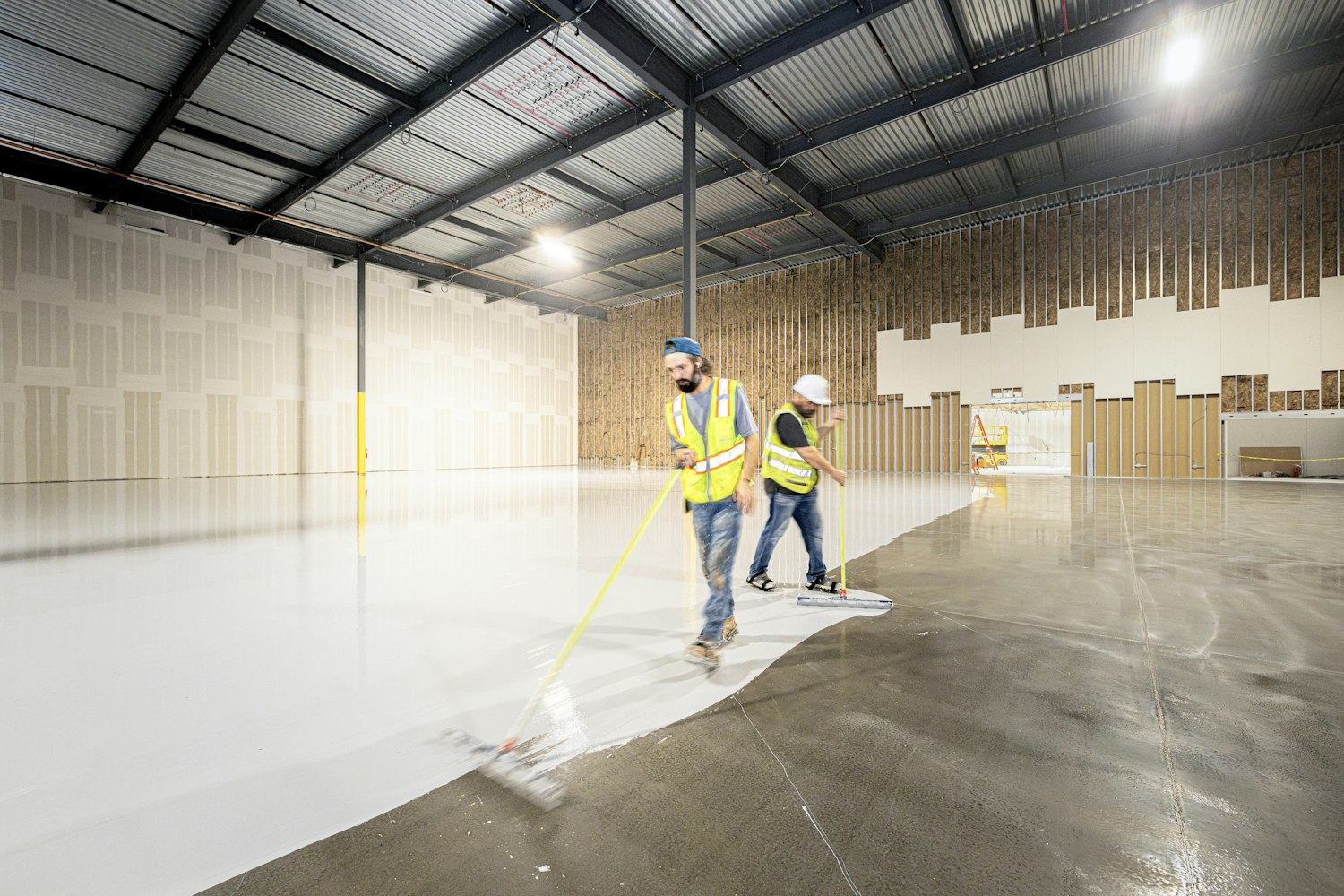
The more we can see and you can tell us on site, the more accurate your written quote is the first time. An on-site estimate is short, but a little preparation makes it productive. Here's a checklist of what to have ready so the quote covers the real scope — prep, system, and timing — with no surprises later.
Access to the Space
Make sure we can see the full floor — clear access to the slab, not just a corner. If the floor is covered by vehicles, storage, or equipment, clearing what you can ahead of time lets us assess the whole surface. For a garage, having it reasonably clear means we can spot cracks, stains, and old coatings that affect prep.
What You Know About the Slab
Tell us anything you know about the floor's history: previous coatings or paint, known moisture or water issues, settling or cracks, age of the concrete, and whether it's been sealed. You don't have to diagnose anything — just share what you've seen. A floor that's had a failed coating, for example, needs that removal built into the quote.
How You Use the Space
The system is specified for how the floor is used. Tell us: garage for parking or for working on cars? Basement that's dry or with moisture history? Commercial kitchen with hot washdowns? Warehouse with forklift traffic? The use drives the system, the slip resistance, and the chemical and thermal rating — so the more you share, the better the spec.
Timing and Budget
Share your timing — when you'd like the work done, and any constraints like a kitchen that can only be down on certain days. A budget range helps us recommend the right system rather than quoting something out of reach. We give you a written quote that includes the prep the slab actually needs, so the number is real before any work starts. The quote is free.