
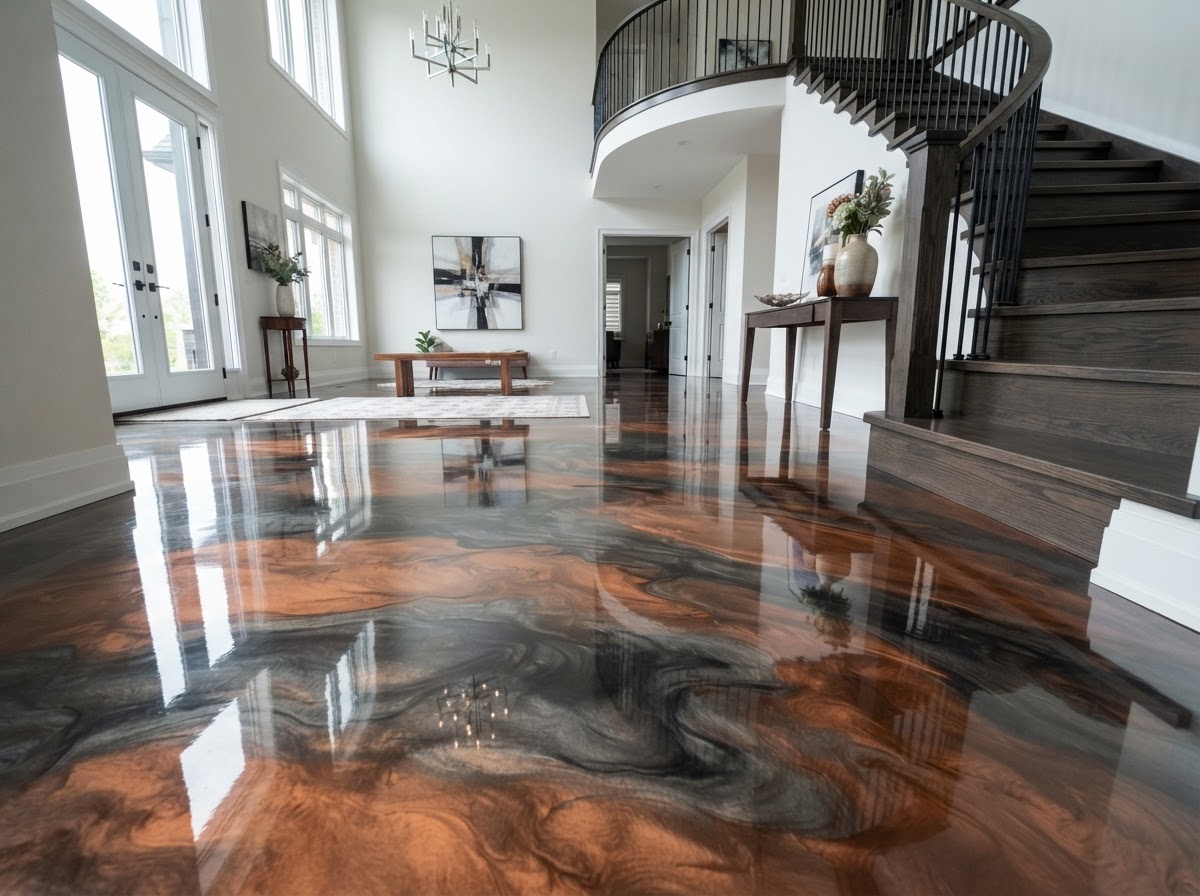
A metallic epoxy floor is the one finish that genuinely changes character as you move around it. The shimmering pigments catch light at different angles, so the color and movement shift with the light source and your viewing position. That's the magic of the finish — and the reason you have to preview it in the actual space, not from a photo.
Why Metallic Shifts
Metallic pigments are reflective particles suspended in clear epoxy. Light hits them from one angle and bounces back differently than from another, so the floor shows depth and movement — flowing veins of lighter and darker color. This means the floor looks different under a single overhead light, under daylight from a window, and from across the room versus standing on it.
Light Source Changes the Color
Warm lighting pulls warm metallics (copper, bronze, gold) forward and can muddy cool metallics (silver, blue). Cool lighting sharpens cool tones and can flatten warm ones. Recessed fixtures create pools of light that move across the floor; a large window gives an even wash that shows the full color. The same metallic reads differently in a dim basement lounge and a bright entryway.
Dominant Color vs. Veining
A metallic floor has a dominant color and contrasting veins of movement. Decide which you want to lead — a calm floor with subtle veining or a dramatic floor with strong contrast. Strong veining is striking but busy in a small space; subtle veining is calmer but less of a statement. The amount of movement is controlled during application, so tell us the look you want.
Previewing in Your Space
Because metallic shifts so much, a physical sample viewed in the actual room is essential. Look at it under each light source, from across the room and up close, at different times of day. A photo of someone else's metallic floor tells you almost nothing about how it will read in yours. Browse the metallic color chart, then request a sample of your top choices.