
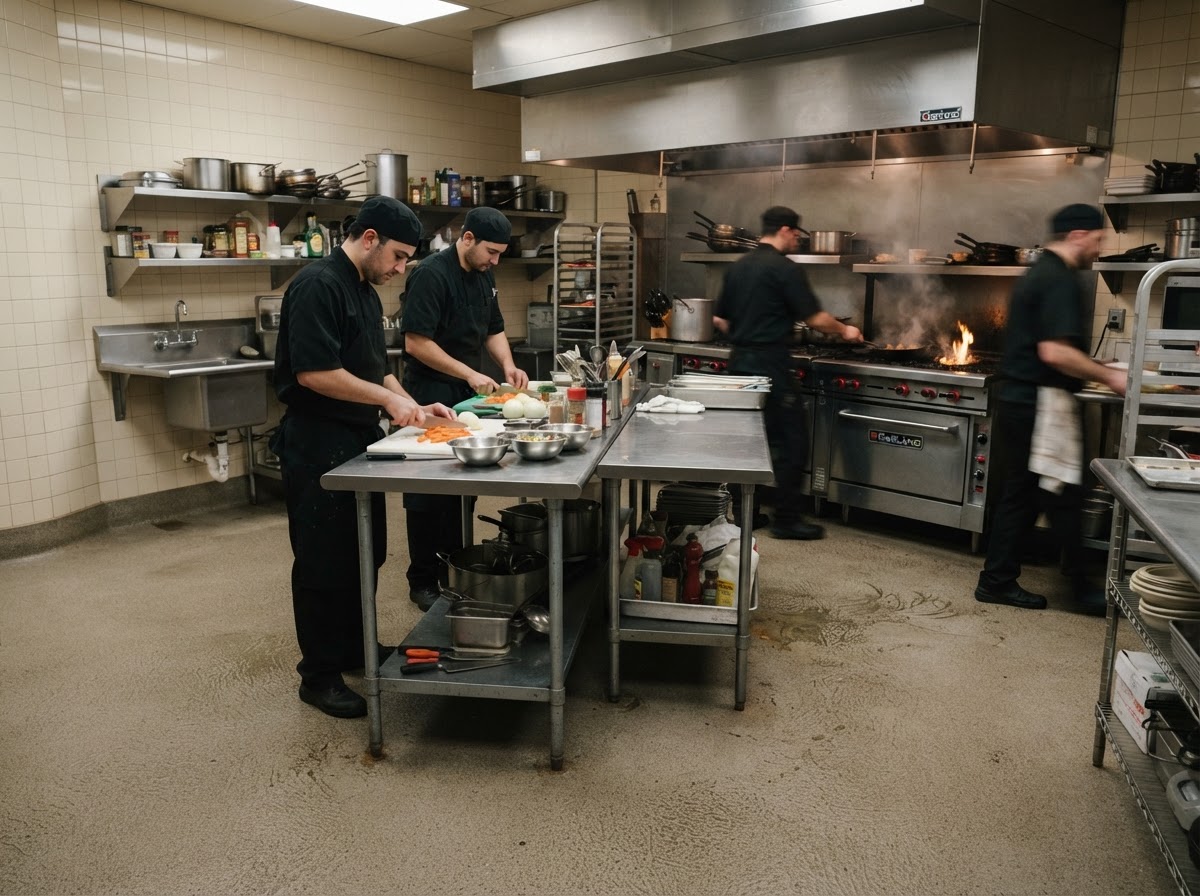
A commercial kitchen is one of the harshest environments a floor can go into. Hot washdowns hit a cool floor and cause thermal shock; grease and food acids attack the surface; sanitizers and heavy cleaning cycle constantly. Standard epoxy fails under those conditions. The conversation before coating is what makes sure the system specified can actually survive the kitchen.
Thermal Shock
When a hot washdown hits a cool floor, the temperature swing stresses the coating. Standard epoxies can crack under that thermal shock. Urethane cement is engineered to take it, which is why it's the standard in commercial kitchens and food processing. If your kitchen does hot washdowns — and most do — the system has to be specified for thermal shock, not just chemical resistance.
Grease, Acids, and Cleaning Chemicals
Kitchen floors see grease, food acids, and aggressive sanitizers daily. The coating has to resist all of them through repeated cleaning, not just on day one. We talk through your actual cleaning regimen — what chemicals, what temperatures, how often — so the system is specified for the real exposure. A floor specified to the wrong cleaning routine is the one that fails early.
Coved Bases and Sanitation
A coved base — a curved transition up the wall — eliminates the floor-to-wall corner where grease and debris collect. In a regulated kitchen, coved bases are often required for sanitation. Planning the cove as part of the floor system means a continuous, cleanable surface with no weak seam. We discuss the radius and height your environment and regulations call for.
Slip Resistance and Downtime
A kitchen floor gets wet and greasy, so slip resistance is a safety requirement, often with a textured or quartz-broadcast surface. And because a kitchen can't be down long, we plan the project around your hours — nights, shutdowns, or phased sections. Tell us your washdown temperature, cleaning chemicals, and hours of operation when you request a quote so we specify correctly.