
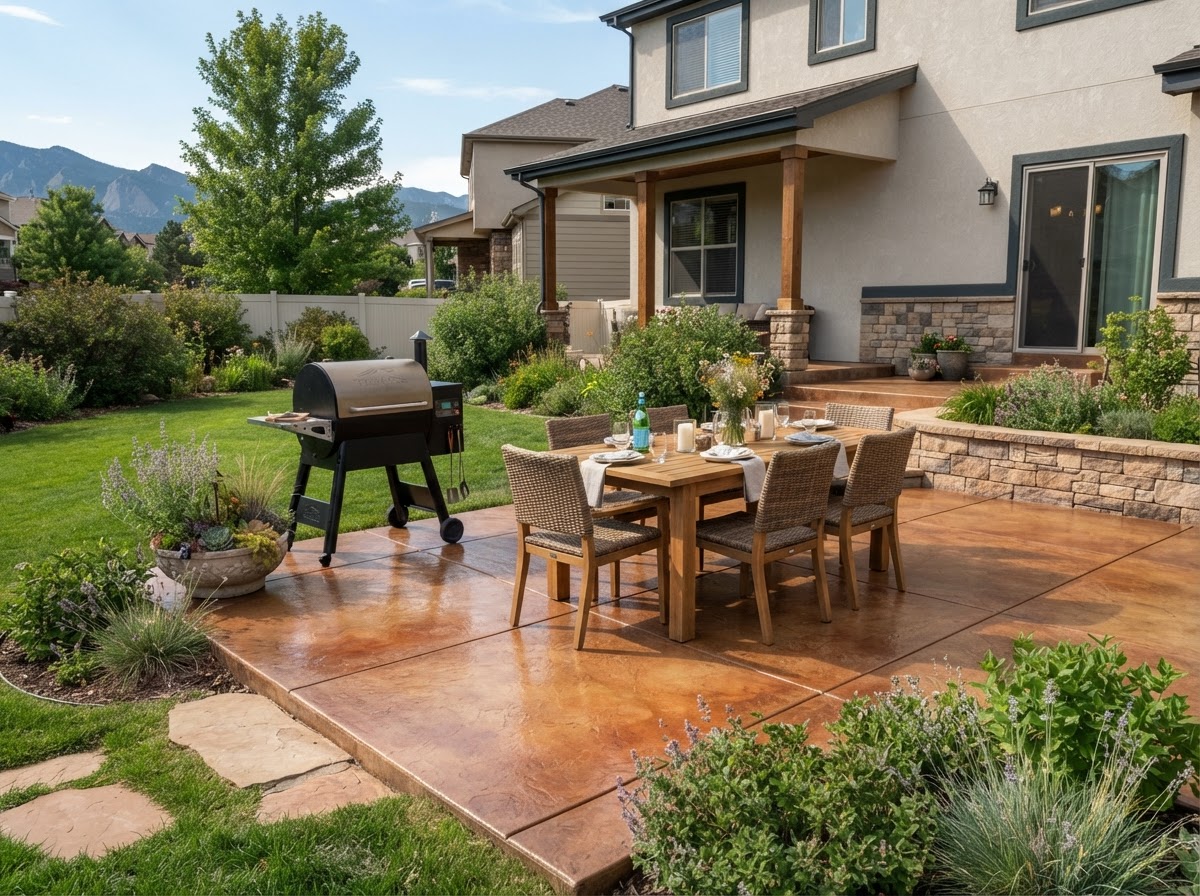
Denver doesn't just get cold — it cycles. Sunny winter days melt surface snow, the water soaks into concrete, and the next freezing night turns it to ice that expands and pops the surface. That repeated freeze-thaw is what cracks and scales outdoor concrete, not the cold by itself. A finish suited to exterior exposure slows the moisture intrusion that drives the damage.
The Freeze-Thaw Mechanism
When water in concrete freezes, it expands by about 9%. That expansion pushes against the concrete from inside the pores. One cycle is harmless; hundreds across a Denver winter are not. Surfaces that stay wet longer — shaded patios, north-facing porches, low spots that pond — take the most cycles and show scaling and cracking first.
Why Outdoor Concrete Needs a Different Finish
Exterior concrete needs a finish that handles UV, temperature swings, and moisture without peeling. A penetrating sealer soaks in to resist moisture and salts without forming a film that can trap water and lift. A UV-stable coating adds more protection and color but must be specified for outdoor use — an interior coating applied outside can yellow, crack, or debond under UV and thermal stress.
Signs Your Outdoor Concrete Is Struggling
Surface scaling (a rough, pitted top layer), hairline cracks that widen over winter, efflorescence (white mineral deposits), and dark patches that stay damp long after the rest is dry are all signs moisture is moving through the slab. Addressing these before coating or sealing gives the finish a sound surface to bond to.
Scheduling Outdoor Work in Denver
Outdoor coating and sealing need stable temperatures and a dry slab, so the window in Denver is roughly late spring through early fall. Planning exterior work for that season — and not rushing it on a marginal-temperature day — is what makes the finish last. Tell us your project location and timing when you request a quote and we'll confirm availability.