
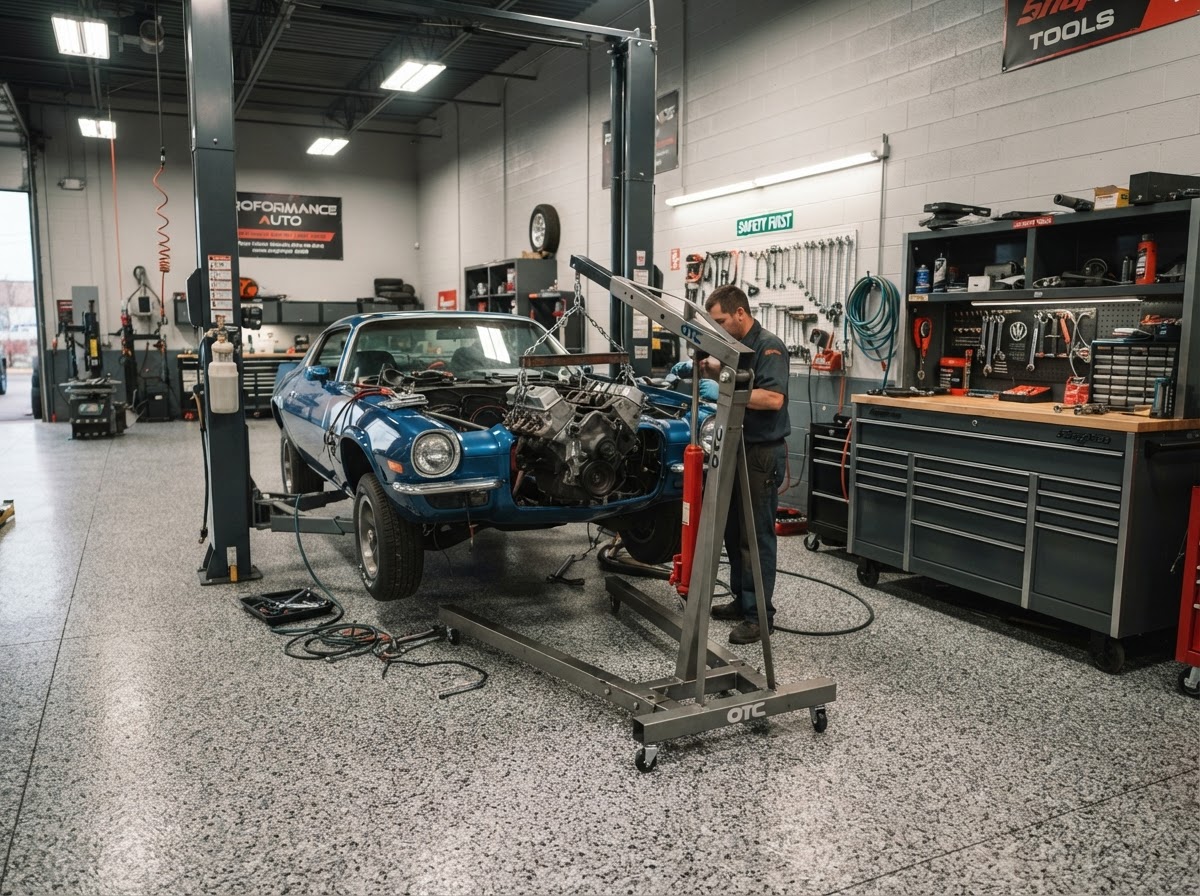
A garage where you actually work on cars asks more of the floor than one where you just park. Oil and coolant spills, hot tires, dropped tools, jack stands, and rolling creepers all stress the coating. The right system — and the right prep — is what keeps it from peeling, staining, or gouging. Here's what a working-car garage floor needs.
Chemical Resistance
Motor oil, coolant, brake fluid, and transmission fluid all sit on a garage floor. A polyaspartic or industrial-grade flake system resists these instead of absorbing them, so spills wipe up rather than staining. The topcoat is what takes the chemical exposure, so the system has to be specified for it — a thin decorative coating that isn't chemical-rated will stain and dull.
Hot-Tire Pickup
Tires heat up on the road and transfer that heat to the coating when you park. A coating that isn't bonded to a properly prepped slab can soften and lift right under the tires — the classic 'hot-tire pickup' failure. Proper mechanical profiling is what prevents it. This is also why a rushed, no-prep installation fails in a working garage within a season.
Impact From Tools and Jack Stands
Dropped wrenches, jack stands under load, and creeper wheels all stress the floor. A flake system's build and topcoat handle normal shop scuffs and tool drops. For heavy point loads — jack stands on a hot day, a dropped engine part — a thicker industrial system or a protective mat under the stand prevents localized damage. No coating is meant to take a dropped engine block directly.
Texture for a Working Floor
A working garage floor gets wet — from snow melt, spills, and washing. A flake finish adds traction over a smooth coating, which matters when you're moving around under a car. A solid finish is easier to roll a creeper on but slicker when wet. Most working garages lean flake for the grip. Tell us you work on cars when you request a quote so we specify a chemical- and heat-rated system.