
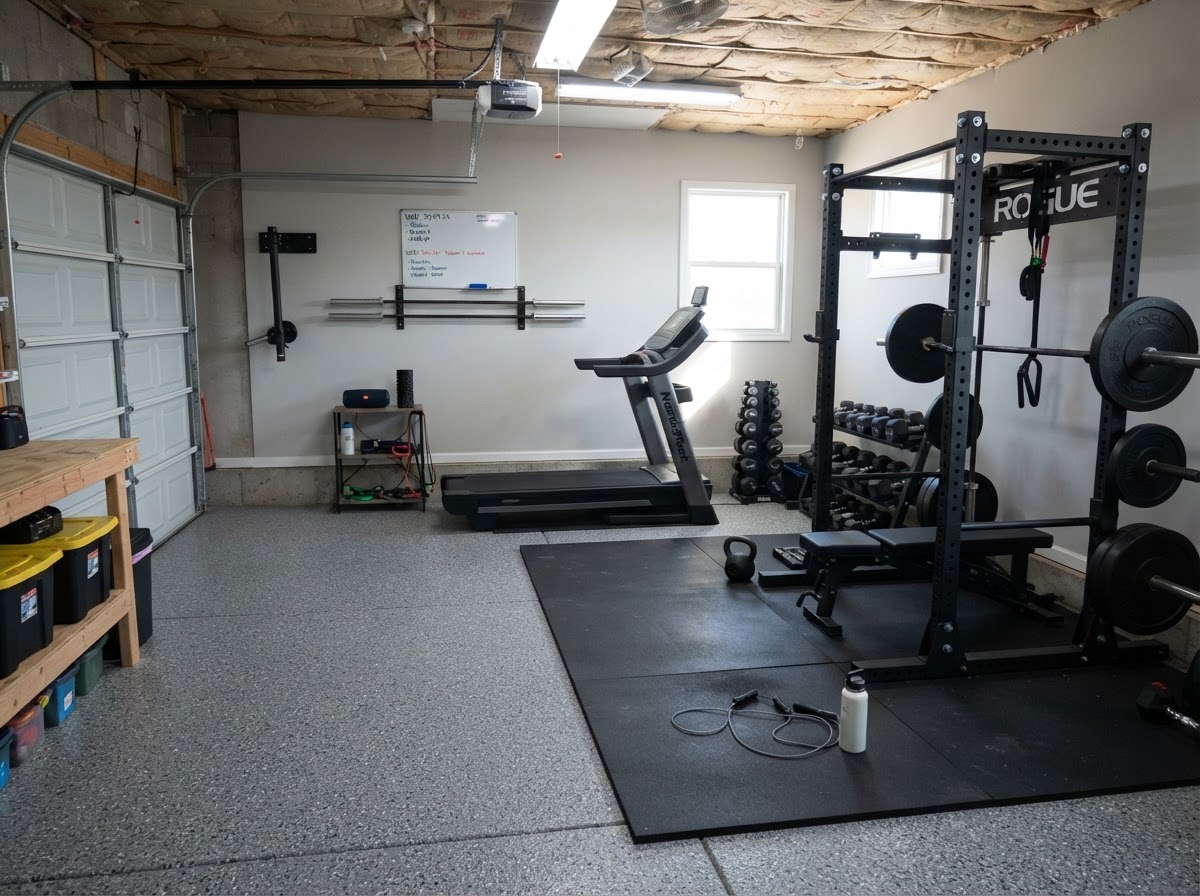
A home gym floor has a specific job: take dropped weights and heavy equipment, resist sweat and chalk, and clean up easily. Not every coating is right for that. The choices that matter are impact resistance, whether you'll drop weights directly on the floor, and how much texture you want underfoot during workouts. Here's how to choose.
Impact and Dropped Weights
If you drop dumbbells or do Olympic lifts directly on the floor, no coating is designed to take repeated direct impact from heavy metal — that's what rubber mats or platforms are for. The coating's job is to give you a clean, durable surface under your mats and equipment. A flake or solid polyaspartic system handles the scuffing, sweat, and equipment sliding that a gym creates. For heavy free-weight drops, plan for a platform over the coating.
Flake vs. Solid for a Gym
A flake finish hides the scuffs, chalk dust, and sweat marks a gym generates, so the floor looks clean longer between moppings. A solid finish is sleeker and easier to sweep but shows every mark. Most home gyms lean flake for the forgiving look; a clean, mat-based strength area sometimes uses solid. Either way, the surface is seamless and non-porous, so sweat and spilled water wipe up.
Texture and Footing
During a workout you want secure footing, but you also don't want a floor that's abrasive during floor work. A flake finish adds just enough texture for grip without being rough. A solid finish is smoother and can be more slippery with sweat, which is something to consider if you do a lot of barefoot or floor work. Rubber mats over either finish handle the traction where you need it most.
Cleaning and Sweat
A coated gym floor is one of the easiest surfaces to keep clean — sweep and damp-mop with a mild cleaner, and sweat, chalk, and spills come right up because there's no porous concrete to absorb them. Avoid harsh chemicals that can dull the topcoat. Tell us how you use the space — cardio, free weights, a garage gym or a dedicated room — when you request a quote.